
After - Color Panels Completed
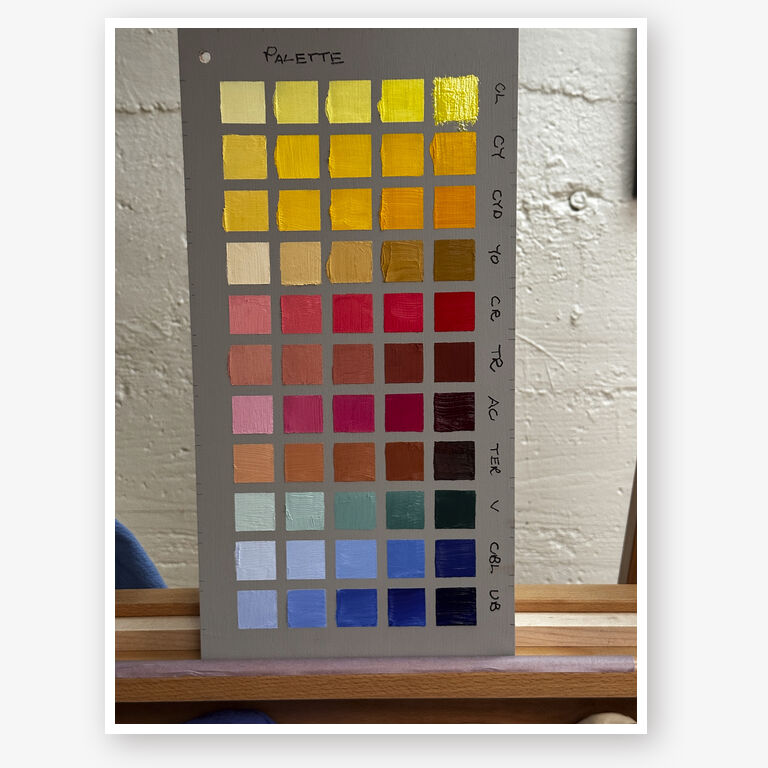
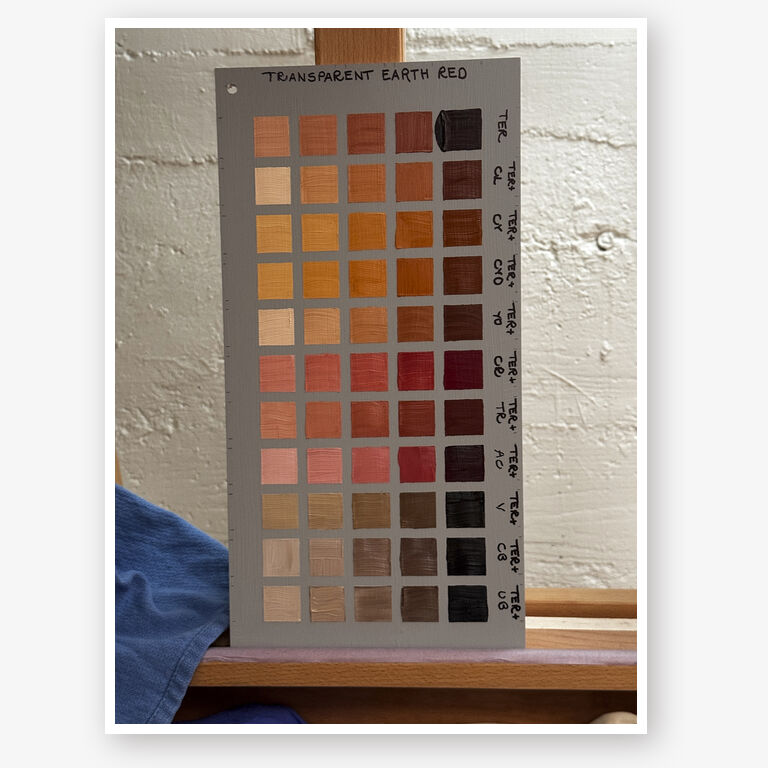
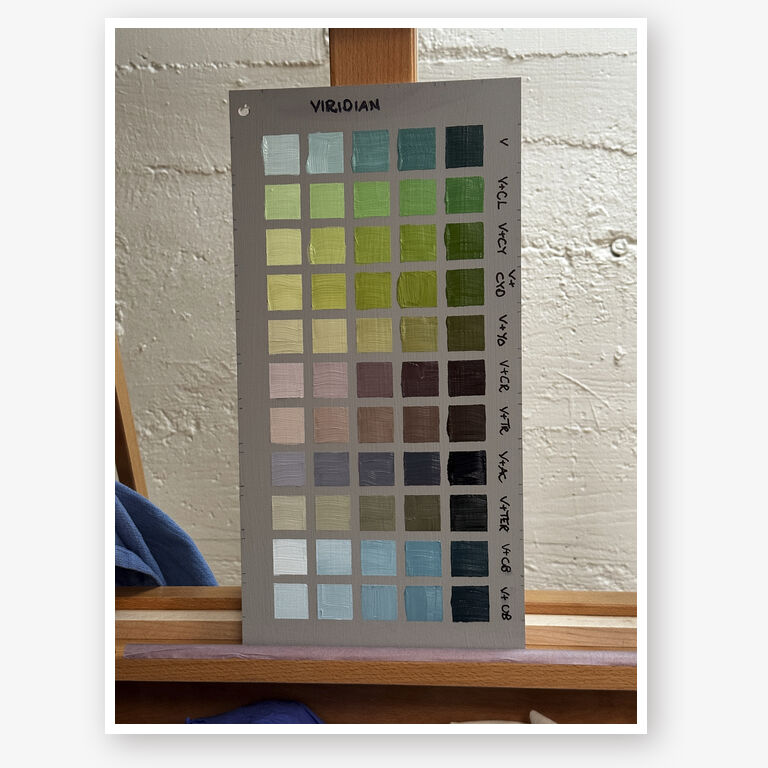
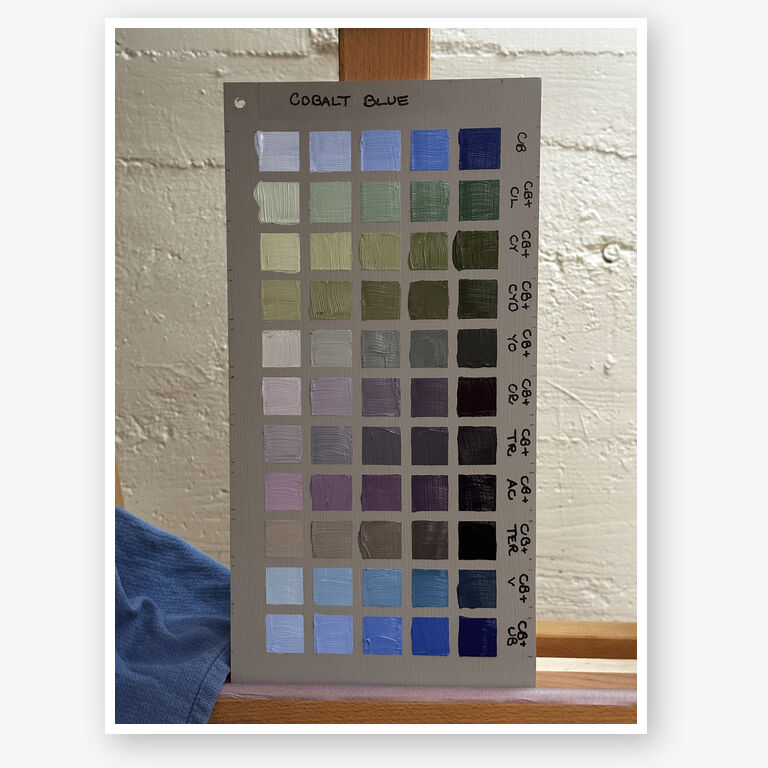
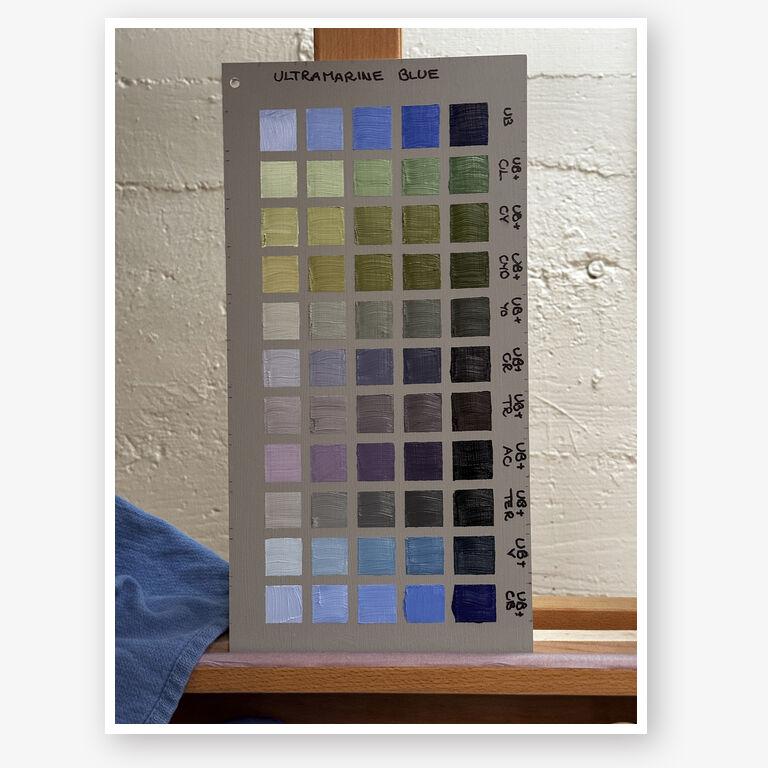
I completed the twelve color panels for the Gamblin (ten) and Windsor-Newton (one, Terra Rosa) oil paints in my basic palette.
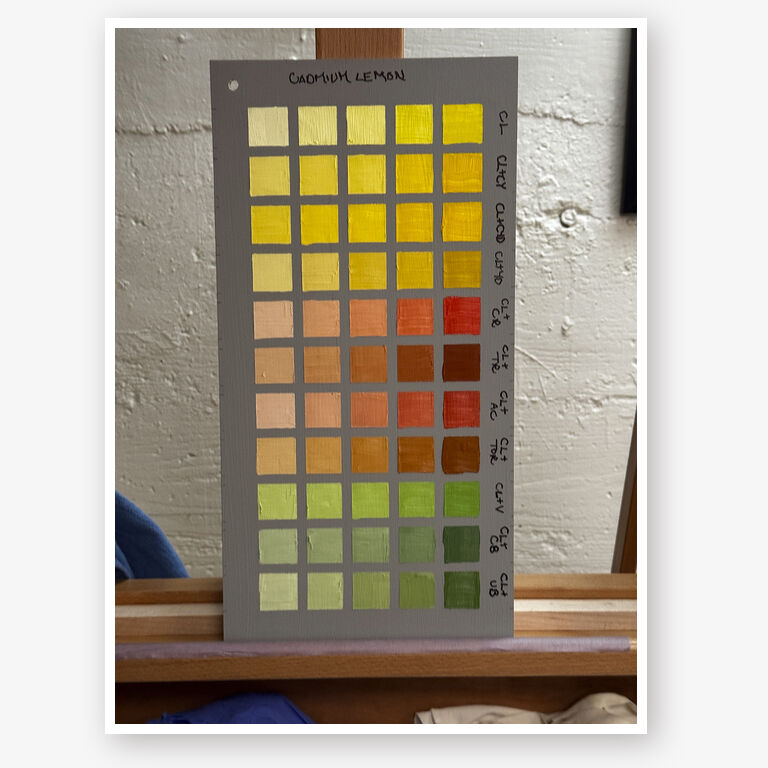
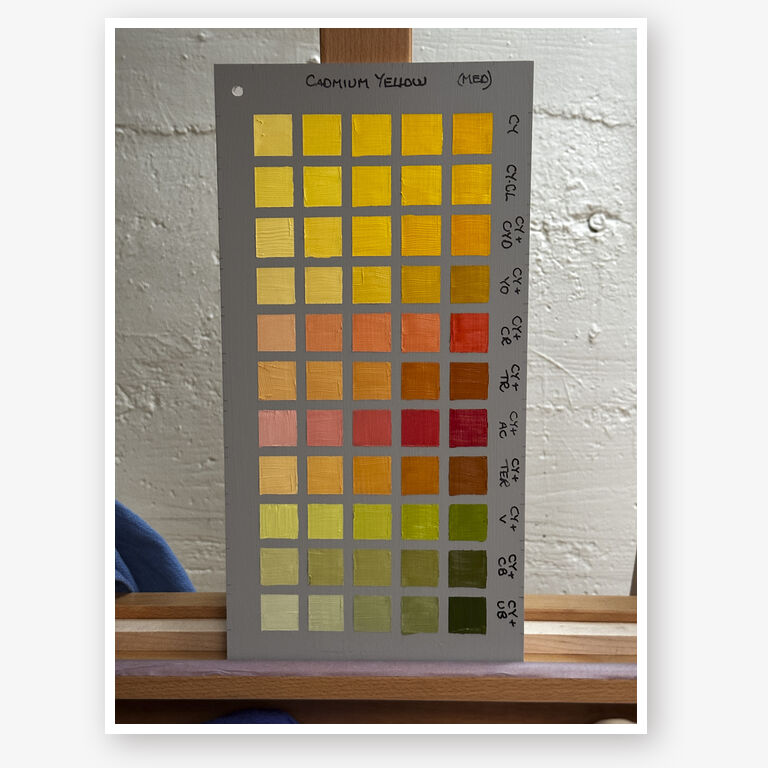
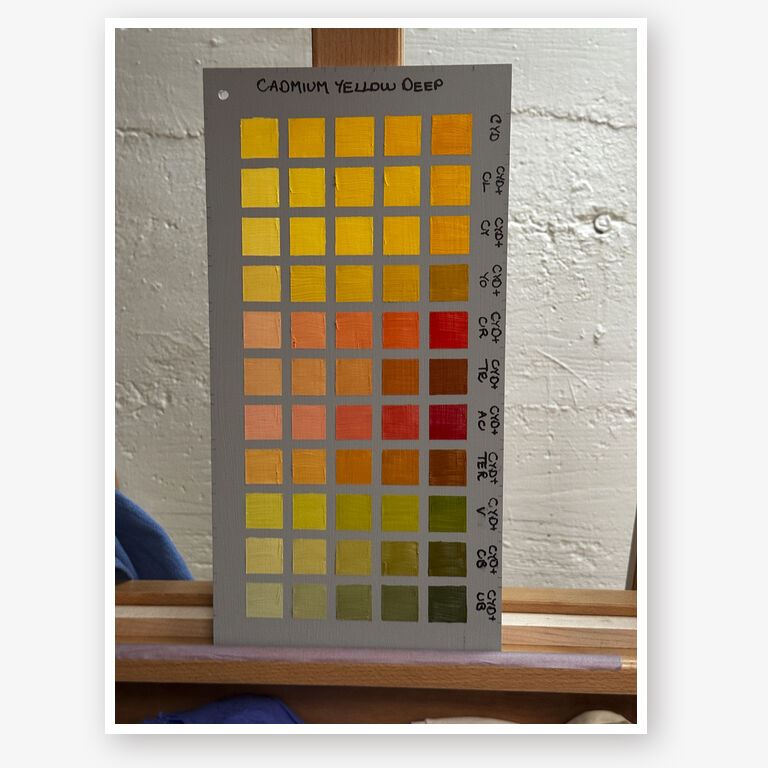
The first panel is all eleven colors with pure color and then four values lighter for each paint. The next eleven are the individual colors mixed as dominant colors with each of the other paints, then lightened again through four values.
These did not take two weeks. It took a day to cut and paint gatorboard grey (two coats) and then another 1/2 day to mark the grids and tape them on all twelve boards. From that it took about two hours each panel to complete.
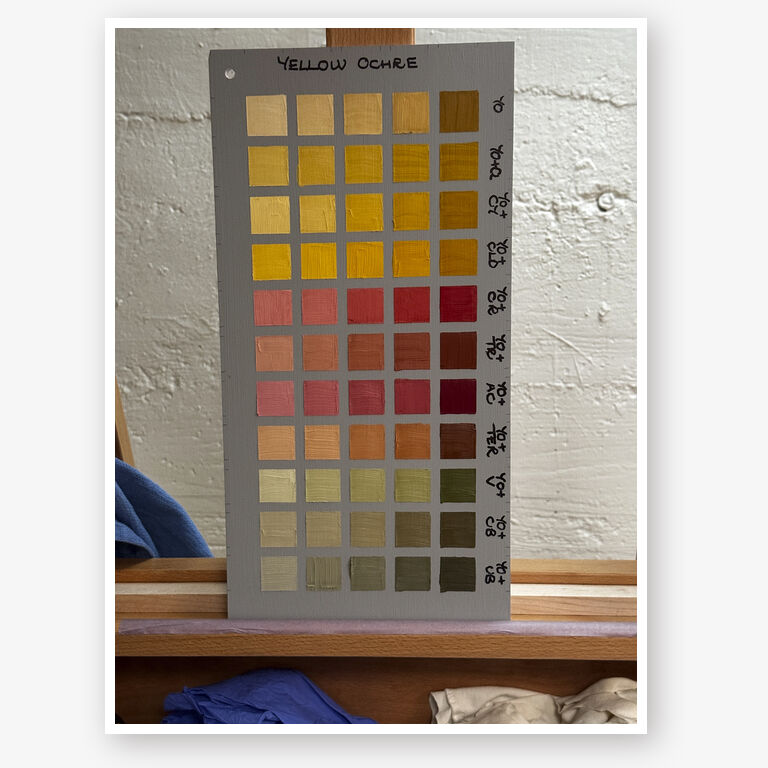
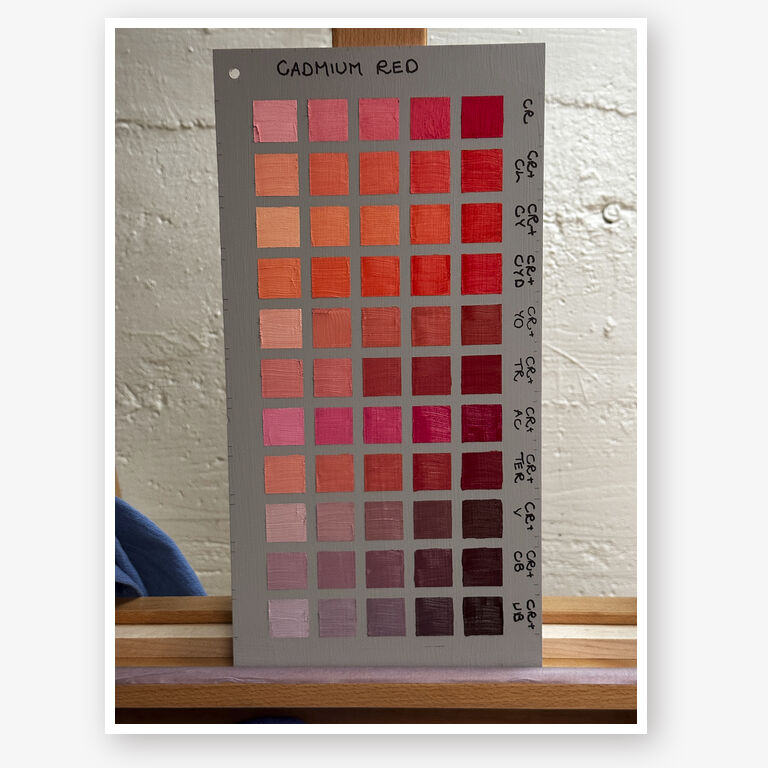
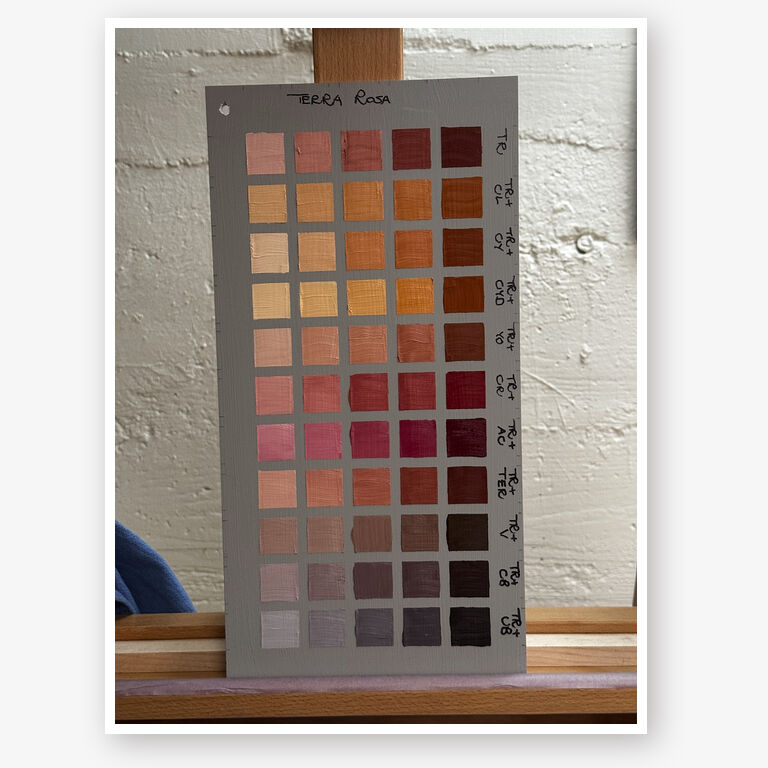
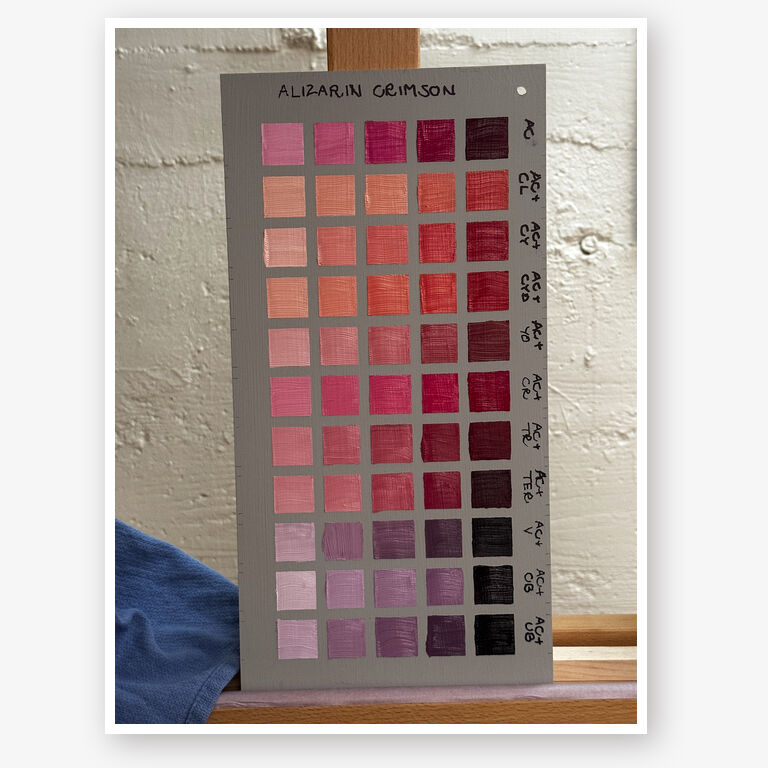
Why do this? What did I learn?
Well, last time I worked with oils, I kept a jar of thinner open to clean the brushes. This time I’m going solvent-free, nothing but linseed oil to clean brushes while painting and no solvents used in thinning or undercoat, only oils (linseed, walnut, safflower). I learned how that’s going to be going froward, mixing and cleaning the brush mostly with a rag between colors.
I learned a lot about how colors mixed, which colors (cadmium red, alizarin crimson) try to dominate a color combination even when they are a small part of the mix.
I experienced the transparency and opacity of the pure color, and the transparency and opacity of each of the color mixes, and the changes as each is mixed with more and more white.
I got quite a few surprises in the mixes. Sometimes I had to refer to Richard Schmid’s Alla Prima II color panels to determine if my paints were really expected to come up with this color? There is some variation, but all of them aligned with the hues expected from mixing.
Alizarin crimson always dominated color mixes. On its panel, the jewel tones in almost all the mixes were a joy to see, and that quality held through except in the cadmium yellows, where it was muted a bit. On viridian’s panel, I was surprised by viridian and alizarin crimson, which came out a perfect slightly cool grey. And transparent earth red became a lush green.
Cadmium lemon was brighter than cadmium yellow and cadmium yellow deep, but the three stayed similar through each panel.
Cadmium red was beautiful, and consistently violet through mixes with viridian, cobalt blue and ultramarine blue on its panel.
The greens from cobalt lemon, cobalt yellow and cobalt yellow deep mixed with cobalt blue are dramatically cool to warm in tone on the cobalt blue panel.
The cobalt blue panel shows a warmth the ultramarine blue panel does not.
Individual colors are just beautiful throughout, and having this survey of what this palette can do is very cool. I am going to post these on my studio wall. It gives a guide even with other colors not included in these eleven, to get to a similar range of hue and then to a specific value.
—spence