
Ground for Still Life
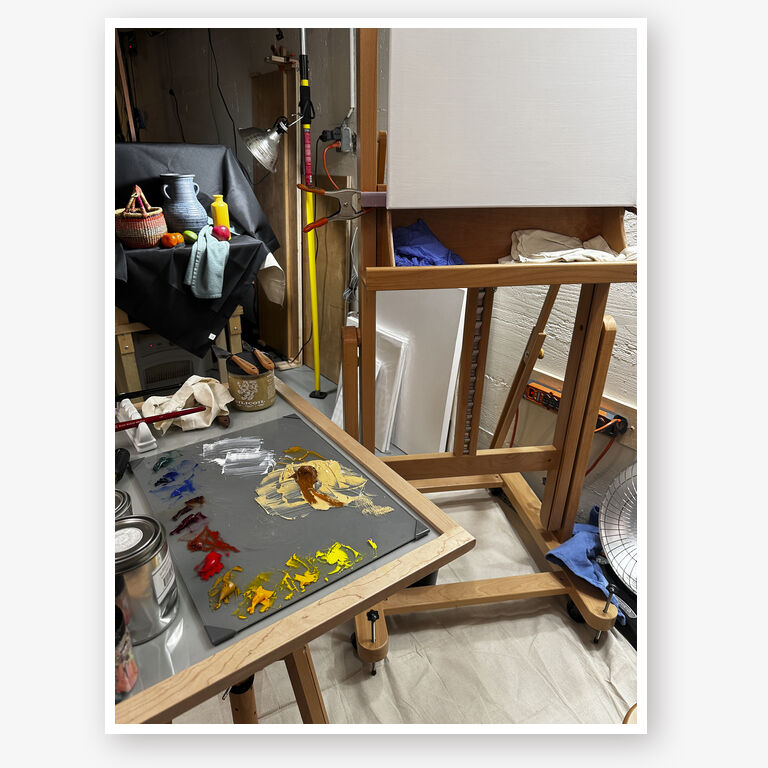
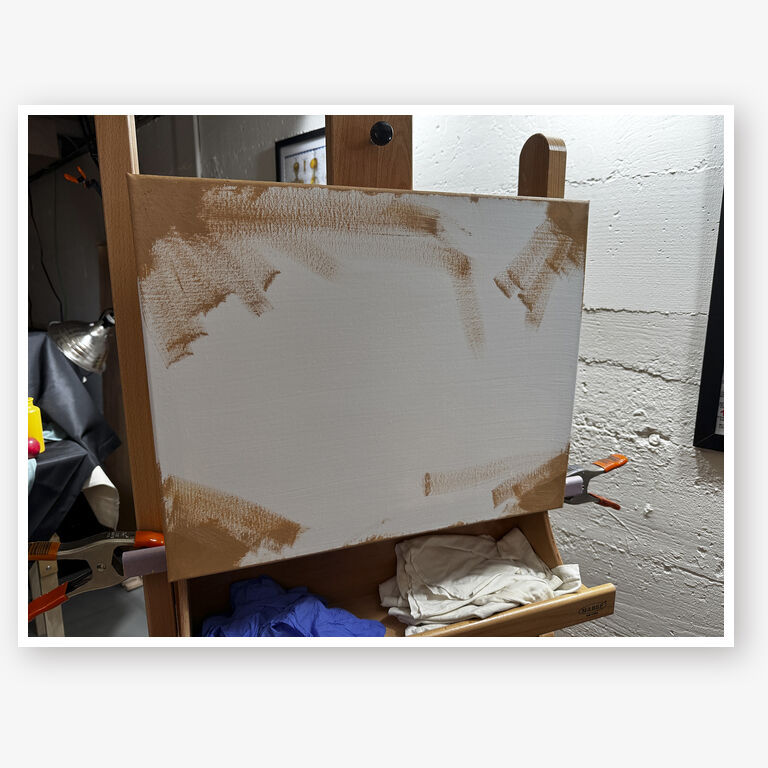
Initial canvas, primed with Windsor-Newton oil primer, and then initial raw sienna ground edges work are above.
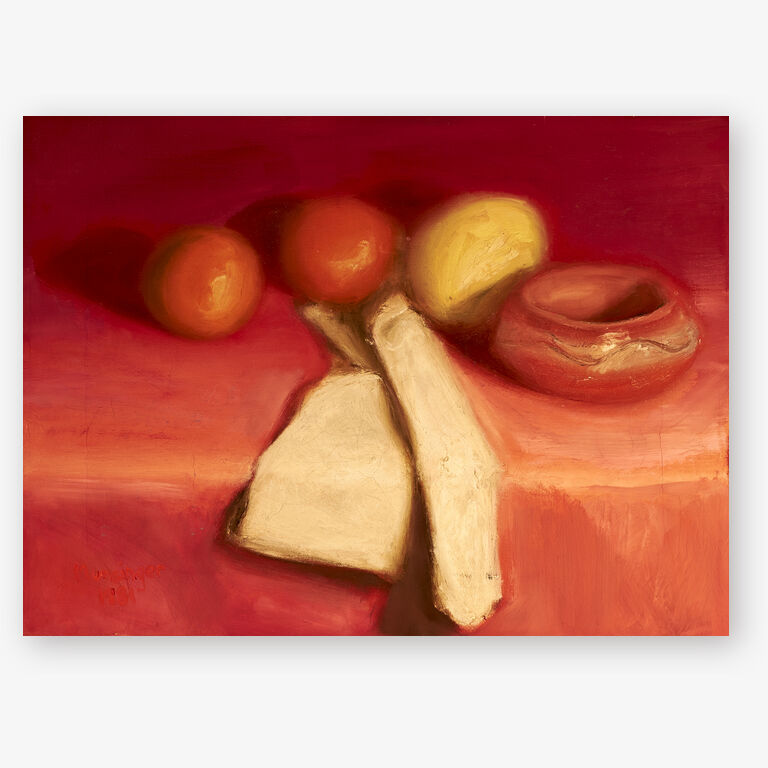
I’ve loved still life since my first monochromatic tone paintings in oils using burnt umber and titanium white. This 16" x 20" oil is one of my favorite paintings. It was the first color glaze work I did, and I’ve looked for a terracotta bowl as delicate and pretty as this one for many years without finding it.
This was painted in an unpainted room, just drywall and tape and drywall mud, in a house I rented a room in. I used the room under construction as a studio with permission of the owners while it was waiting the money for further work. I had a homemade painting bench, not an easel, and I had a similar, home-built still life bench. I grabbed a couple of tangerines and a lemon, and borrowed this bowl from the kitchen for a day or so. Light came from a window. I was taught a painting should be made of paint, so I built up the texture in the bowl and carved the wavy line around the bowl into the paint.
This was painted in 1980 or so. It was the last work I did for, let’s see, 1980 to 2004… 24 years, until I started painting again in 2004.
I have this painting through many, many moves and many different homes and circumstances. There is a lot of other artwork I’ve misplaced or lost over the years. This one is very special to me.
After finishing color panels for the basic Garmin (and one Windsor-Newton) colors, I want to return to still life and do a series of still life paintings. I love Richard Schmid’s still life work, and I want to try some of the methods he describes of starting and working through a painting from life.
The first step was to prep the factory canvases for oils, by lightly sanding the manufacturer’s gesso sealer to roughen it, then apply Windsor-Newton oil primer to the canvas. I’ve started out prepping four canvases, and I’ll keep prepping another 2 each time I finish a pair of still lifes. The primer says it will take 24 hours to dry, but it seems more like it takes 48 before the edges stop being tacky.
Once the primer is dry, I’m applying a mid-tone value colored ground by scrumbling white + raw sienna for two canvases, and white + yellow ochre for two more. The edges are directly painted by brush.
The first images in this note show the raw primer and the edge painting work.
These next two are the spread of pigment using a palette knife (spreading it directly with a brush took too long), and the final ground after working through the pigment with a brush to fill in areas the palette knife missed or left too thinly applied, and to add texture to work on. The oil primer comes out smooth.
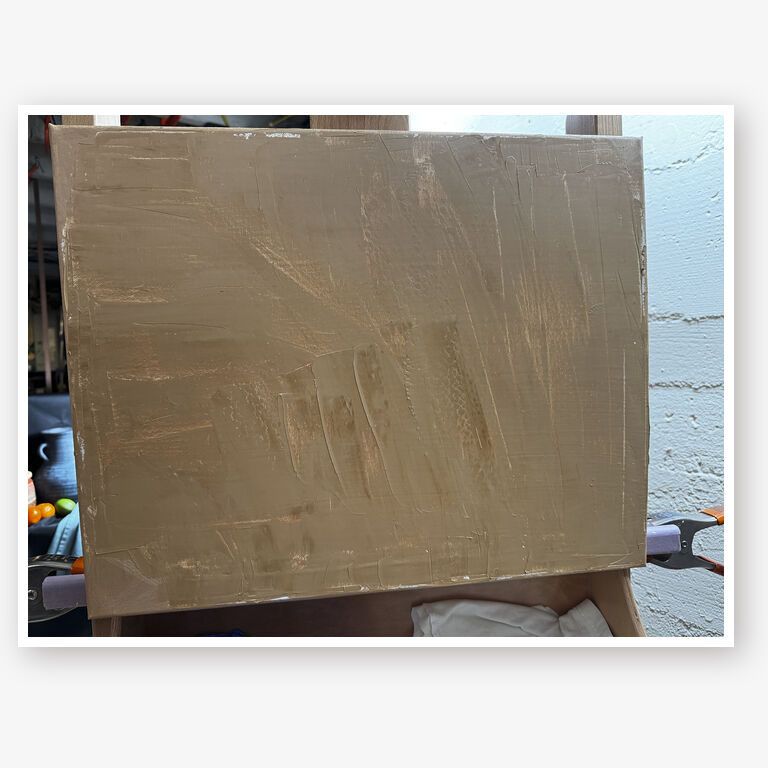
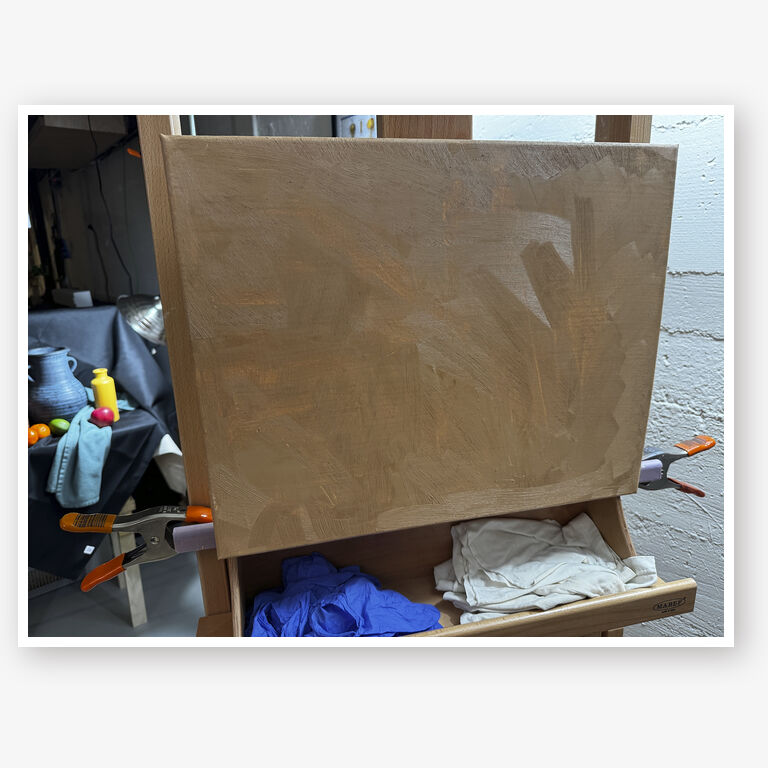
All four of these (this one is raw sienna) turned out beautifully, and I’m looking forward to working on these surfaces.
In the background is the first possible still life. I may re-arrange before I start painting. This first set up is fruit and objects but I will add in flowers at the first opportunity.
—spence