
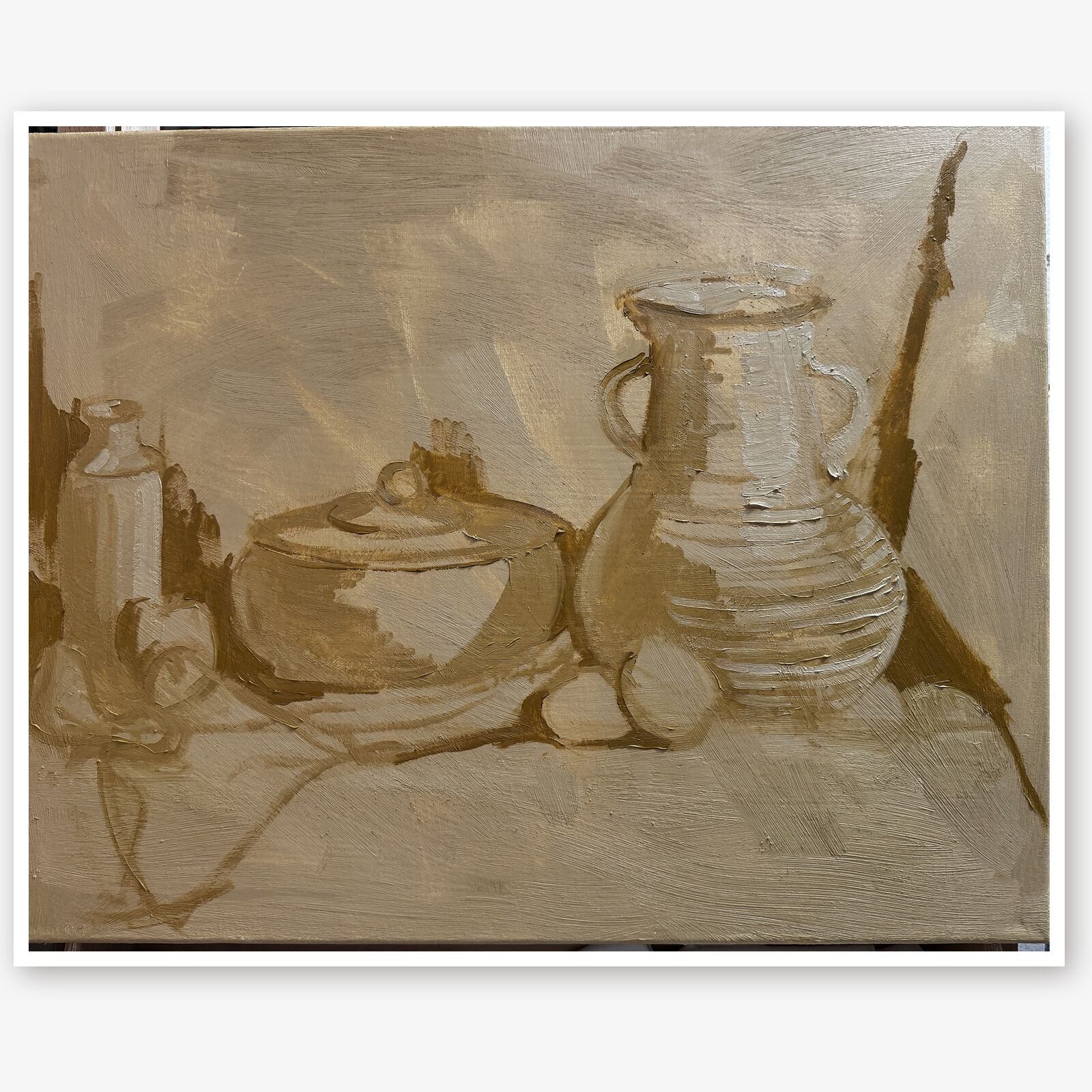
Learning to See Values
The difference between this second pass through a value study for a still life and the first is dramatic.
Here’s the earlier value study. Workable, but not consistent throughout - the changes I saw in that first pass were not subtle. I used squinting to exaggerate the tone values and in judging them was not yet seeing the minor changes in value. I kept wanting to reach for burnt umber to extend the darks and I had a very light mix into yellow ochre to capture the lighter values.
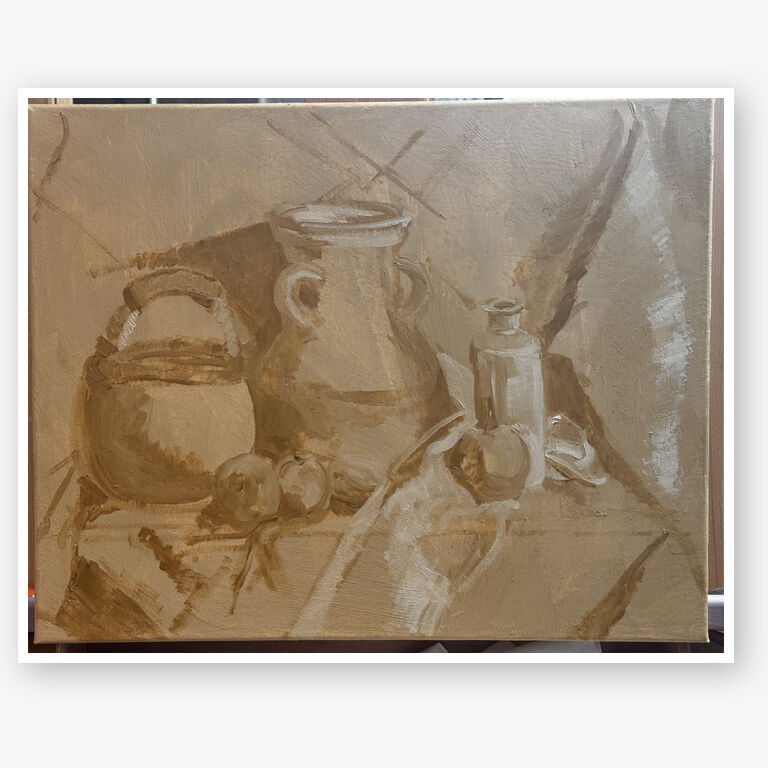
This second painting began as a sketch.
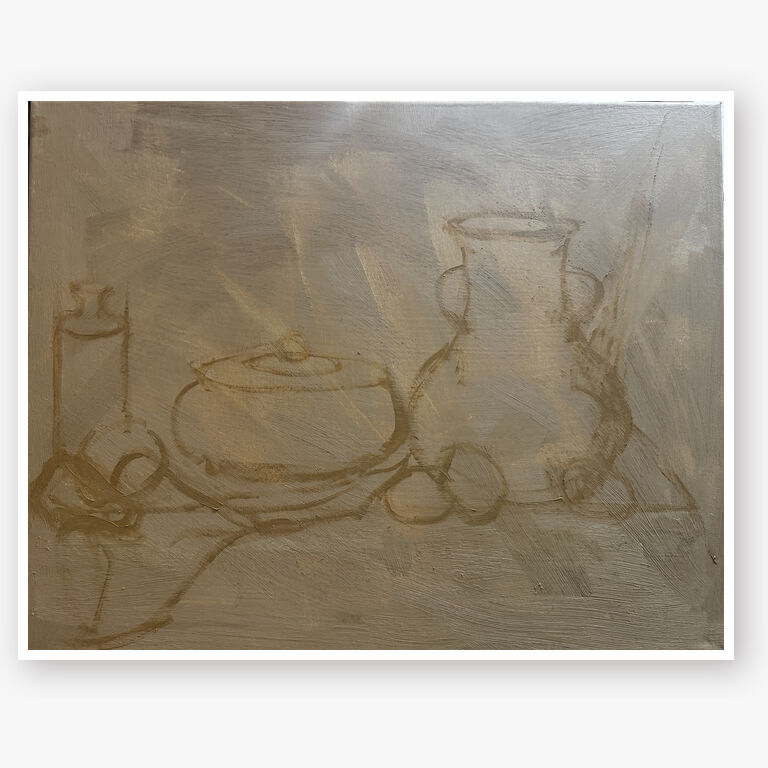
And then became a much subtler value study at the second pass.
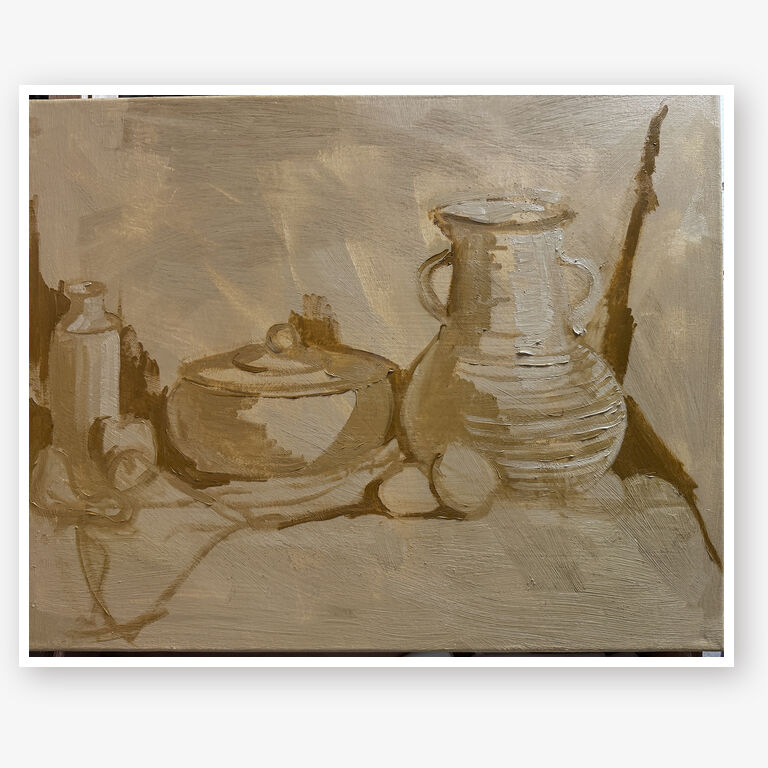
I am definitely recovering the ability to see subtle changes in value. I realized I am NOT yet using the digital technology most of us have in our hands to aid in seeing and speed up the accuracy of my own judgements. That would look more like this…
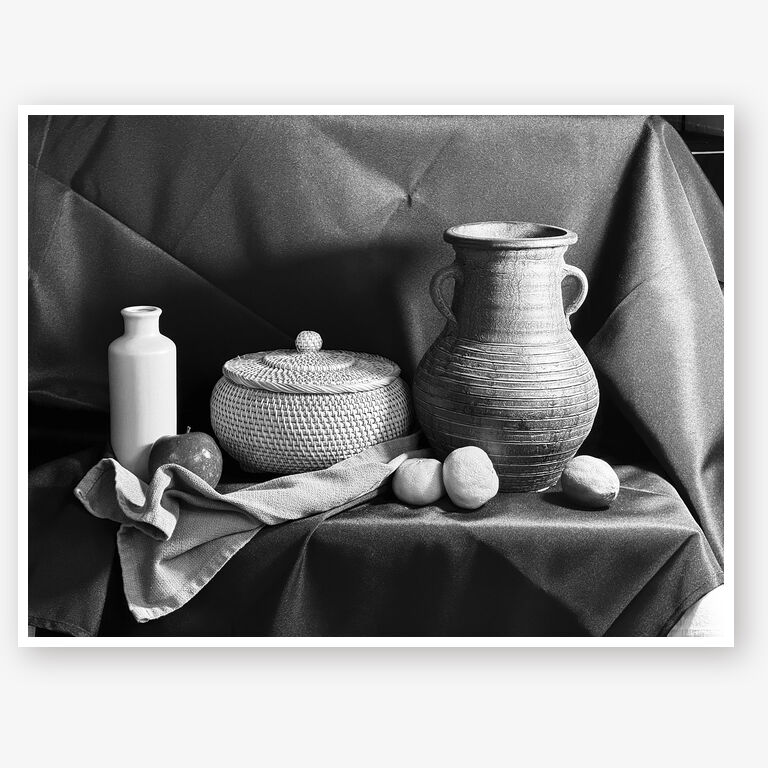
I built a portable easel to mount on a tripod several years ago in 2011. I had to find it (I had stored it on top of a wardrobe cabinet), but it is perfect for showing the black and white print alongside the actual still life and the tone painting on my studio easel.
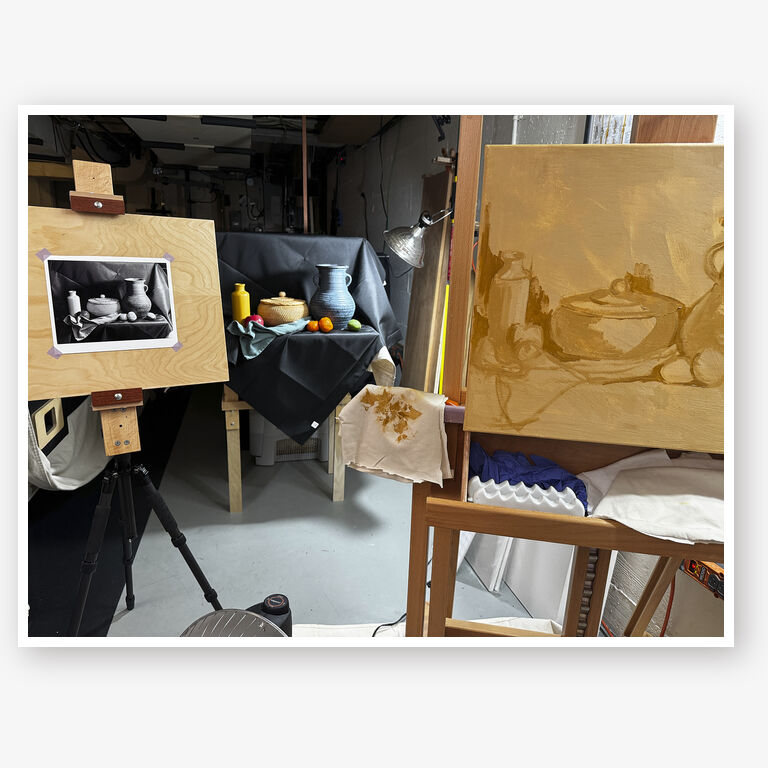
Once I have the values piece of this where I want it, I’ll drop back to the first still life and fix the overall values to be more consistent and true to the still life setup.
One other trick with digital imaging and values would be to mix the colors and values I think would work in the still life and then photograph the palette, convert that photo to B&W, then verify the actual values are as expected, comparing them to the black and white photo of the still life setup.
I’ll keep starting still lifes without this, though - learning to see values directly, without the digital verification until after that first couple of passes - is worth doing.
—spence